Why is ChatGPT a bigger deal for med spas than Google?
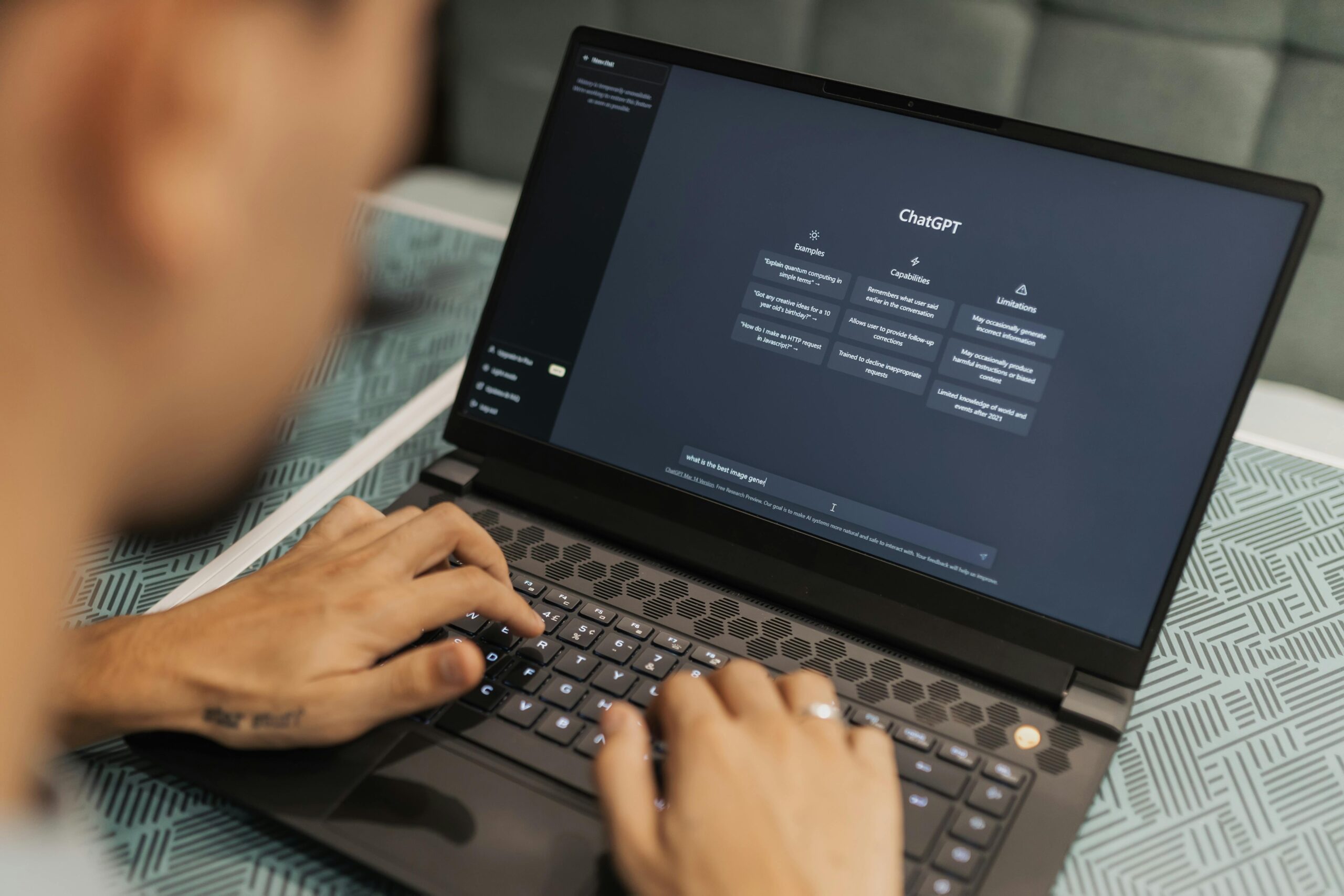
A prospective patient used to type “best med spa near me” into Google and compare ten clinics. In 2026, more of those patients ask ChatGPT, Perplexity, Claude, or Google AI Overviews “best Botox in Manhattan” or “where should I get lip filler in Dallas” and get one paragraph naming two or three practices. Whoever is named wins the consult. Everyone else is invisible for that lead.
The patient is at peak intent
Someone typing “I want Botox in Stamford this week” is not researching, they want a recommendation right now. AI gives them one. There is no longer a top-ten safety net to land in.
Aesthetic marketing copy looks identical to AI
Every clinic uses the same brand language – “luxury experience,” “expert injectors,” “natural-looking results.” AI search collapses that into a clean confident answer that feels more authoritative than scrolling fifty look-alike sites. The clinic with quotable content wins. The clinic with brand copy is invisible.
The funnel is narrower than owners realize
Google could show ten clinics. ChatGPT shows one to three practices total. Most owners have never measured whether their med spa is inside that funnel, and the ones who run the test for the first time are usually unpleasantly surprised. The AI search audit framework we run for med spa Botox and filler queries is the first step in finding out.
How does ChatGPT decide which med spas to cite?
ChatGPT, Perplexity, Claude, and Google AI Overviews do not search the live web the way Google does. They assemble answers from training data, real-time web search (when enabled), and a small set of authoritative sources they have learned to trust for a given category. When deciding which med spa to name for “best Botox in Houston” or “lip filler near Manhattan,” they evaluate four signals.
Authoritative source mentions
For aesthetics, the trusted set is narrower than most owners think: RealSelf, Google Business Profile reviews, Healthgrades, vitals.com, device-maker locators (Allergan PartnerPlus, Galderma Rewards, Merz Aesthetics), and regional lifestyle press. Mentions on generic local directories carry far less weight.
Schema.org structured data
Does your website tell AI engines explicitly that you are a MedicalBusiness or MedicalClinic in a specific city, with named Physician records for each provider, offering specific MedicalProcedure services? Most med spa sites have no schema at all, which forces AI to guess from prose. Adopting the MedicalBusiness schema framework we deploy for med spa websites typically produces first citations inside four to six weeks.
Content that reads like an answer
AI engines preferentially cite pages that answer questions in plain, declarative language. A treatment page that opens with “What is Botox? Botox is an FDA-approved neurotoxin that temporarily relaxes facial muscles to soften expression lines” gets quoted. A page that opens with “Discover the rejuvenating power of Botox at our luxury suite” does not, because the AI cannot lift marketing prose into an answer without sounding like an advertisement.
Entity consistency across the web
Your practice name, address, phone number, and provider names should match exactly across every site that mentions you. “Smith Aesthetics” on Google, “Smith Medical Spa” on RealSelf, and “Dr. Smith MD Aesthetics” on Healthgrades cannot be resolved into one confident entity. Inconsistency costs you citations the same way it costs you Google rankings, except in AI search there is no top-ten consolation prize.
What is the 7-step process to get your med spa cited?
This is the same sequence we run for every med spa engagement, whether the practice is injector-led, device-led, or a full-service spa. Order matters because each step compounds the next.
Step 1: Audit what AI currently says about your practice
Open ChatGPT, Perplexity, Claude, and Google AI Overviews. Run five to ten queries your patients actually use: “best Botox in [your city],” “lip filler near [your city],” “best med spa for [your treatment].” Note for each: were you named, who else was named, in what order. One hour of work, before/after baseline locked in.
Step 2: Deploy MedicalBusiness, Physician, and MedicalProcedure schema
One-hour developer task. The schema should declare your full address, service area down to the city, named providers with credentials, and specific treatments including brand names (Botox, Juvederm, Restylane, Morpheus8, CoolSculpting). Without schema, AI engines guess from prose. With it, they get a machine-readable record they can cite directly.
Step 3: Rewrite your top three treatment pages as direct answers
Pick Botox, your highest-volume filler, and one signature device treatment. For each, rewrite the first paragraph to answer the patient question a prospect would type into ChatGPT. “What is Botox? How long does it last? How much does it cost in [your city]?” Keep your brand voice below the fold, but the opening sentence has to function as a quotable definition.
Step 4: Get listed accurately on the surfaces AI engines cite
For aesthetics, the high-value surfaces are predictable: Google Business Profile, RealSelf, Healthgrades, vitals.com, the device-maker directories (PartnerPlus, Galderma Rewards, Merz Aesthetics), and one or two regional aesthetic publications. Concentrate, do not scatter. Practices that spread thinly across fifty generic listings see almost no AI lift.
Step 5: Earn reviews on diversified platforms
A practice with three hundred Google reviews and zero RealSelf reviews looks thinner to ChatGPT than a practice with one hundred reviews split across both. The AI weighs multiple authoritative sources. Shift some of your review-ask effort to the platforms you currently neglect.
Step 6: Publish content that answers the questions AI is being asked
The questions ChatGPT is asked about your treatments are not a secret. They are the questions your phone answers every day: “How much does Botox cost in [your city]?” “Does Morpheus8 hurt?” “What is the difference between Botox and Dysport?” Write one post per question. Three good posts beat thirty thin ones for AI citation purposes.
Step 7: Track citations over time
Re-run the query list every two to four weeks. Watch which practices are named, the language used, and whether your name appears. Citation share compounds, and new wins for queries you did not specifically target are the strongest signal that the foundation work is paying off.
We run 25 to 35 prompts across ChatGPT, Perplexity, Claude, and Google AI Overviews for your specific treatments and city, then send you a report showing which competitors are getting cited, what content gaps your practice could win, and the priority order for the foundation work. The audit is free. No commitment.
How long does GEO take to show results for a med spa?
The honest answer is four to sixteen weeks, depending on your starting point and the cleanliness of the work. The sequence is predictable.
Weeks 1 to 4: foundation gets crawled
Schema markup and listing consistency get picked up. AI engines start to recognize your practice as a structured entity. No citations yet, but the machine-readable scaffolding is in place.
Weeks 4 to 8: first citations appear
Rewritten treatment pages get indexed. Initial citations appear for less competitive queries – specific treatments in specific neighborhoods, niche devices. This is the window where most practices start to hear “I saw you in ChatGPT” from consult calls.
Weeks 8 to 16: competitive queries get earned
Higher-competition queries like “best Botox in [major metro]” take eight to sixteen weeks because the AI has to gain enough independent evidence to displace a competitor it already trusts. This is the make-or-break window.
Month 4 to 6: citation share stabilizes
Practices that committed to the foundation work are dominating AI recommendations for their treatments and cities by now. Practices that quit at month two are still invisible. Local SEO takes six to twelve months to move; GEO is faster because the surfaces AI reads are smaller and cleaner, and entity confidence compounds faster than backlink authority.
What mistakes should med spas avoid with AI search?
Five patterns explain most of the wasted spend we see when practices try to retrofit existing marketing for AI search instead of doing the foundation work.
Treating GEO like SEO
SEO optimizes for ranking in ten blue links. GEO optimizes for being the cited practice in an AI single-answer recommendation. The tactics overlap but the priority order and the measurement framework are different. Practices that hire a local SEO agency expecting AI results are usually frustrated four to six months in.
Hiring a generalist aesthetic marketing agency
Most agencies serving med spas are still optimizing for 2018 Google and Instagram engagement. They do not know which schema types apply to medical aesthetics, do not write content in a structure AI engines can lift from, and do not run AI search audits as part of their measurement.
Chasing more Google reviews when the gap is elsewhere
Adding one hundred Google reviews when you already have three hundred does little for AI citations. The marginal lift is on RealSelf, Healthgrades, and the device-maker directories where you currently are not. Audit before you accumulate.
Skipping measurement
Without a before-and-after audit, you do not know what is working. We have seen practices invest in the wrong tactics for six months because they had no baseline. The audit itself is the cheapest part of the engagement and the only honest way to know your GEO work is moving the needle.
How do I know if my med spa is already being cited?
The short answer: ask. The longer answer is a structured audit across multiple engines and prompt variations, because results vary by query phrasing, location signal, web-search state, and time of query.
The minimum five-minute test
Open ChatGPT. Type “best Botox in [your city].” Read the answer. Are you named? Are you named first? What does the AI say about you? Repeat in Perplexity, Google AI Overviews, and Claude with the same query. That is the baseline.
The full audit protocol
For a credible baseline, run five to ten queries in each of the four engines, capture which practices are named and in what order, and note the language each engine uses. About three hours of work manually, plus another two to four hours of comparative analysis to find content opportunities.
What to do with the results
If you are never mentioned, you have an entity-confidence problem and the fix is foundational. If you are mentioned inconsistently, you have a specific treatment or geography gap. If you are mentioned but described incorrectly, you have a source-data problem and it is the most fixable of the three. Each pattern maps to a different priority order in the seven steps above.
Frequently asked questions
How much does GEO cost for a med spa?
Foundation work for a single-location med spa typically runs as a 90-day pilot covering audit, MedicalBusiness/Physician/MedicalProcedure schema deployment, treatment page rewrites, listing cleanup across the AI-cited surfaces, and a measurement baseline. Ongoing optimization after that is a fraction of what most practices already pay for paid social and traditional SEO. Per-consult acquisition cost typically improves inside the first four months because AI-cited leads convert at higher rates than paid social clicks.
Can I run the 7-step process myself or do I need an agency?
The audit, yes – any owner can do the five-minute baseline test in an evening. Schema markup is a developer task (straightforward but technical), so quote your existing site developer if you have one. The hardest part for most practices is rewriting treatment pages in answer-shaped language, because it requires unlearning the brand voice your agency trained you to use. If you have an in-house marketing person comfortable with structured data and direct-answer content writing, you can run this yourself. If you do not, hiring a GEO specialist is faster and cheaper than learning the discipline from scratch.
What if my med spa only serves one specific city or one treatment?
That is an advantage, not a limitation. The narrower your target, the easier it is to dominate AI citations for it. We have seen practices become the top-cited result for queries like “best Morpheus8 in [secondary metro]” inside three to four months because the competitive set is shallow and the AI has fewer trusted incumbents to choose from. Generalist practices in major metros take longer because they are competing against established multi-location chains that AI engines have already learned to trust.
Do I still need traditional Google SEO if I am doing GEO?
Yes, because Google Business Profile reviews and rankings are one of the inputs ChatGPT and Perplexity use to decide which med spas to cite. GEO does not replace local SEO – it sits on top of it and shifts emphasis toward the surfaces AI engines actually read. The foundation work (clean NAP, schema markup, well-structured content) benefits both. The tactical priorities diverge after that, which is why most practices need a strategy that explicitly addresses AI search alongside traditional SEO instead of treating them as the same problem.
How do I measure GEO ROI when AI-cited consults are hard to attribute?
Two metrics matter. First, named-appearances per query cycle: lock in five to ten city-specific queries, run them through ChatGPT, Perplexity, Claude, and Google AI Overviews every two to four weeks, and track whether your practice is named. That is the leading indicator. Second, add an “AI search” option to your consult intake form (or just ask in the consult) so you can attribute booked consults to AI. Within three to four months of foundation work, most practices start hearing “I asked ChatGPT” and “Perplexity mentioned you” from new patients.
Will AI search ever stop being important for med spas?
Specific tactics will keep changing – new models, new engines, different ranking signals. The underlying behavior of patients asking AI for aesthetic-treatment recommendations is now a permanent fixture in how med spas get discovered. ChatGPT alone reaches more than 800 million weekly active users in 2026 and aesthetic queries are a meaningful slice of that volume. The practices establishing citation share now will defend it for years because entity confidence compounds. The ones waiting will pay more later to catch up.