Why is AI search visibility especially important for NYC med spas?
New York is the most expensive aesthetic market in the country to buy visibility in and the hardest to earn it in. AI search is changing both sides of that equation at once, which is why owners in this market feel the shift first.
NYC has the highest density of aesthetic practices in the US
Medical Spa Locator lists 146 med spas in the five boroughs in 2026, and that count understates the real number once dermatology offices, plastic surgery practices, and dentist-injector hybrid offerings are included. Industry analysts estimate Manhattan alone has more med spas per square mile than most entire US cities, with neighborhoods like Midtown, SoHo, the Upper East Side, and Williamsburg saturated with providers offering near-identical Botox, filler, and laser menus. Differentiation through treatment menu is essentially gone. Differentiation through visibility is the only lever left.
Manhattan keyword CPCs run two to three times the national average
For paid search, the cost of being visible in NYC aesthetics is already brutal. Public 2026 reporting from agencies serving the NYC market puts CPCs on aesthetic keywords at two to three times national benchmarks, with “Botox NYC” and “lip filler Manhattan” routinely above $15 per click. Practices that lean on paid acquisition alone burn budget before they break even on first treatment. AI search is the first surface in years where the cost of being early is genuinely lower than the cost of being late.
AI engines collapse hundreds of NYC options into a paragraph
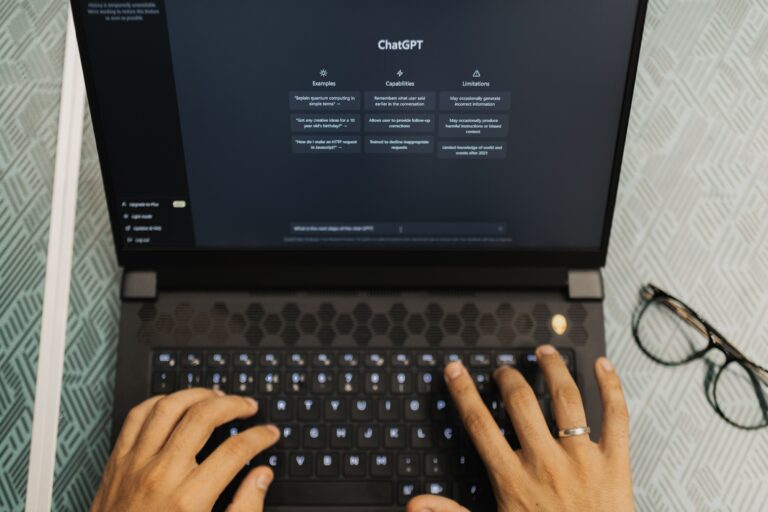
The Gartner forecast from February 2024 projected a 25 percent drop in traditional search engine volume by 2026 due to AI chatbots, and aesthetic queries are running ahead of that curve. A patient who used to type “best Botox in Manhattan” into Google and see ten ranked results now types it into ChatGPT or Perplexity and sees a paragraph that names two or three practices. The other 143 NYC med spas on the Medical Spa Locator list are invisible at the moment the decision is being made. The compression is more severe in NYC than in smaller markets because the field of options is so much larger and the AI is forced to be more selective.
What kinds of “best Botox in Manhattan” queries are actually being asked?
Owner-operators who think this is one query are already losing. The NYC aesthetic AI search landscape is a cluster of about a dozen distinct query patterns, and the practices winning citations show up across most of them, not just one.
Treatment-plus-borough queries
These are the canonical searches: “best Botox in Manhattan,” “top med spa for filler in Brooklyn,” “best lip injector in Queens.” They map directly to consult intent. Patients running these queries are usually within four to fourteen days of booking. The AI’s answer here drives the most measurable revenue, which is why these queries are the first ones to optimize for.
Neighborhood-specific queries
NYC patients think in neighborhoods, not in boroughs. “Best Botox in the Upper East Side,” “med spa in SoHo for lip filler,” “Tribeca dermatology for Morpheus8,” and “Williamsburg injector for natural-looking filler” all get asked. Practices that name their neighborhood on the homepage, in their schema, and in the first paragraph of the treatment page get cited more often on these queries because the AI has explicit entity-level confirmation of where they sit.
Provider-credential queries
NYC patients filter on credentials more aggressively than any other US market. “Best board-certified dermatologist for Botox in Manhattan,” “MD injector for filler NYC,” “nurse practitioner for laser in NYC who trained under [named provider]” all show up in AI search logs. Practices with provider pages that include real credentials, fellowship histories, and training affiliations get cited disproportionately on these queries.
Price-and-value queries
“How much is Botox in Manhattan,” “average filler cost NYC,” “Botox membership programs in Manhattan.” NYC patients run price queries more than national average because the price spread is wider. AI engines reward practices that publish honest price ranges over those that hide pricing behind a consult call.
Comparison queries
“Best Botox in Manhattan vs Brooklyn,” “Midtown vs Upper East Side med spas for filler,” “RealSelf top providers in NYC.” These are decision-stage queries where the AI is being asked to compare named options. Visibility here requires editorial mentions and third-party validation, not just a clean website.
How do AI engines decide which NYC med spas to name?
The selection criteria are not random and they are not opaque once you know what to look for. Four categories of signals do most of the work in 2026.
Entity-level schema markup on the homepage and treatment pages
AI engines need to confidently identify your practice as one entity before they can cite it. In a market with 146 listed med spas, ambiguity is fatal. The 2026 stack that parses cleanly is MedicalClinic or MedicalBusiness on the homepage and location pages, Physician or Person for each named provider with role-specific fields, and MedicalProcedure for each treatment page, all linked with stable @id references so engines see one connected graph instead of disconnected blocks. Most NYC med spa sites have a generic LocalBusiness block from a 2019 SEO retainer and nothing else. That alone is enough to keep them out of most NYC AI answers.
Answer-first content on the top three treatment pages
ChatGPT, Perplexity, and Claude are trained to avoid lifting promotional language into their answers. A treatment page that opens with “Our highly skilled providers tailor every treatment to your unique aesthetic goals” gets skipped. A treatment page that opens with “Botox in Manhattan starts at $14 per unit at our practice. Most patients use 20 to 40 units per treatment. Results appear in 7 to 10 days and last 3 to 4 months” gets lifted into the AI’s answer with the practice name attached. The rewrite is the highest-leverage content move available, and it costs nothing.
Third-party authority across RealSelf, manufacturer pages, and editorial
Public 2026 reporting on AI citation patterns in aesthetics consistently shows that RealSelf, manufacturer device-locator pages, and high-authority editorial coverage like New York Magazine and Town and Country are weighted disproportionately for NYC queries. A practice with zero RealSelf presence is often invisible in ChatGPT and Perplexity answers regardless of how clean their website is. NYC has the strongest editorial ecosystem of any aesthetic market, which is both a high bar and a real opportunity.
Review velocity and recency
Reviews influence Google’s local algorithm and signal trust to AI engines, especially on “best [treatment] in [city]” queries. The 2026 pattern in published commentary is that steady velocity and recency move citation eligibility more than raw star count. In NYC, where most established practices have 200 to 800 reviews from years of operation, a practice with 90 reviews evenly distributed across the last twenty-four months can outperform a competitor with 600 reviews mostly dated 2019 to 2021. Recency reads as relevance.
We run a free 25 to 35 query audit across ChatGPT, Perplexity, Claude, and Google AI Overviews for your top treatments and your specific neighborhood. You get a written report in 48 hours with the named-appearance baseline and the first three fixes to make.
What changes should a Manhattan med spa make to its website to win AI citations?
The fix order is consistent across every NYC practice we audit. It is one to three weeks of structural work, not a six-month agency engagement, and it produces measurable citation movement inside four to six weeks.
Deploy a clean medical schema stack on the top five pages
Homepage gets MedicalClinic or MedicalBusiness with neighborhood-specific address and areaServed. Each provider page gets Person or Physician with credentials, training, and license state. The Botox, filler, laser, and body contouring pages each get MedicalProcedure with brand names of products used, price ranges, treatment duration, and aftercare details. Every block is linked with stable @id references so the engines see one entity graph. This is a two-to-four hour developer task. Most NYC med spa sites ship with none of it.
Rewrite the first 150 words of the Botox, filler, and laser pages
Open each top treatment page and read the first paragraph out loud. If it sounds like a brochure, the AI will not quote it. Replace it with direct factual answers: what the treatment is, which products you use and why, how long results last in your patient population, what it costs in dollars at your practice, whether it hurts. Keep your brand voice in the body of the page. Lead with the answer the AI will lift. This is the highest-leverage content change we sequence first in the GEO audit framework we run for med spa schema, treatment, and provider visibility, because in a saturated market the cost of opening with marketing copy is direct revenue loss.
Claim and complete the RealSelf profile
For NYC aesthetic practices, RealSelf is the single most-cited third-party surface across ChatGPT and Perplexity answers for treatment queries. Claiming the profile is free. Completing it with provider credentials, before-and-after photos with treatment notes, and answers to a few “Doctor Q and A” questions takes about three hours and pays back across the four major AI engines simultaneously. NYC practices that skip RealSelf are leaving the easiest authority surface in aesthetics on the table.
Build a neighborhood-specific landing page for each location you serve
A Midtown med spa that also serves Upper East Side patients should have a distinct landing page targeted at the Upper East Side audience, with neighborhood-specific schema, copy, and reviews. AI engines reward explicit neighborhood entity signals. A single homepage that lists “serving all of Manhattan” gets cited less reliably than a clean architecture with one page per neighborhood served, each with its own MedicalClinic schema block and at least 600 to 900 words of useful, non-duplicated content.
Earn one to two editorial mentions in NYC publications per quarter
This is the longest-cycle work and the hardest to control. NYC has the strongest aesthetic editorial ecosystem in the country: New York Magazine, Town and Country, Allure, Harper’s Bazaar, the New York Post style desk, and a long tail of beauty and lifestyle outlets. AI engines weight mentions in these sources heavily. A practice that gets quoted once or twice a quarter as an expert source in a treatment story will see citation gains across all four major AI engines within two to three months.
How long does it take a NYC med spa to start appearing in AI answers?
NYC is a harder market than most because the competition for citations is broader and the AI weights external authority more heavily. The timing is slower than in a smaller metro, but it is predictable.
Perplexity moves first, usually within days
Perplexity does live web retrieval on every query. A clean schema deployment and a rewritten treatment page typically shows up in Perplexity citations within seven to fourteen days for medium-competition queries like “best Botox in Murray Hill” or “lip filler in Williamsburg.” The very highest-competition queries like “best Botox in Manhattan” take longer because the field is so broad.
ChatGPT Search and Claude follow within two to four weeks
ChatGPT Search and Claude refresh citations on a days-to-weeks cycle. After foundational work, named-appearance gains on medium-competition NYC queries usually show up in the second to fourth week. By month two, most practices that complete the structural work are appearing on at least one or two queries they were invisible for at baseline.
Google AI Overviews lags one to three weeks behind ChatGPT
Google AI Overviews depends on Google’s crawl and index cycle. Schema changes typically reflect within one to three weeks of crawl. AI Overviews is the most “SEO-like” of the four engines, which means it favors practices with strong organic rankings, clean Google Business Profile, and recent review velocity. A NYC med spa that already ranks on page one of Google for its treatments usually starts appearing in AI Overviews within four to six weeks of cleaning up schema.
High-competition NYC queries take eight to sixteen weeks
“Best Botox in Manhattan,” “top med spa in NYC,” and “best lip injector in New York” are the most contested queries in US aesthetics. The AI is weighing dozens of practices with strong fundamentals against one another, and the tiebreakers are third-party authority and editorial mentions. Practices completing only the schema and content rewrite usually start appearing on the long tail first (neighborhood-plus-treatment queries) and move up to broader queries over months two through six.
Frequently asked questions
Is “best Botox in Manhattan” really a query patients use, or do they ask differently?
Both. Patients use the literal phrase “best Botox in Manhattan” and longer variants like “where to get Botox in Manhattan without it looking frozen” and “Manhattan dermatologist for natural-looking Botox.” AI engines collapse all of them into similar answer sets. Optimizing for the literal high-volume phrase tends to lift visibility on the long-tail variants too because the AI uses the same entity-level signals for both.
Does a single-location NYC med spa stand a chance against multi-location chains in AI search?
Yes, especially in 2026. AI engines weight relevance and authority signals, not raw size. A single-location Manhattan practice with clean schema, answer-first content, strong RealSelf presence, and steady review velocity will outperform a multi-location chain with disconnected schema and generic brochure pages. Owner-operated practices actually have an advantage on provider-credential queries because they can be specific about who treats the patient, while chains often genericize provider biographies.
Should a Manhattan med spa optimize for borough-level or neighborhood-level queries first?
Neighborhood first if you only serve a tight radius, borough first if you serve broadly. Both should be on the site. A practice that optimizes only for “Manhattan” misses the meaningful share of patients asking for the Upper East Side or SoHo specifically. A practice that optimizes only for one neighborhood misses cross-borough traffic. The right architecture is a borough landing page plus a neighborhood landing page for each neighborhood you draw from, all with distinct schema and copy.
How important is Yelp in NYC aesthetic AI search?
Less important than Google reviews and RealSelf, but more important than in most US markets. Yelp has historical reach in NYC service categories and still surfaces in some AI answers, especially Claude and Google AI Overviews. A claimed and active Yelp page with 30+ reviews is worth maintaining as a supporting authority surface. It is not a primary lever.
Will hiring a NYC SEO agency get a med spa into ChatGPT answers?
Sometimes, but rarely on purpose. Most NYC SEO agencies in 2026 are still running 2021 local SEO playbooks, with Google Business Profile optimization, link building, and on-page keyword work. That work feeds Google AI Overviews indirectly but does not move ChatGPT, Perplexity, or Claude on its own. Before assuming a current agency is doing GEO, ask three questions: which schema types are they using on treatment pages, how do they measure AI citation share, and which third-party authority surfaces beyond Google have they earned mentions on in the last twelve months.
How does a NYC med spa measure AI search visibility once the foundation is built?
Run a fixed list of 25 to 35 queries through ChatGPT, Perplexity, Claude, and Google AI Overviews monthly. Count named appearances per query and engine. Track citation share over time. Most NYC owners we audit do not currently know whether their practice is named on a single AI engine for a single high-intent query. That single baseline number is more useful than any other metric for the first ninety days of GEO work.
What to do this week
Open ChatGPT with web search enabled. Run these five queries: “best Botox in Manhattan,” “best med spa for lip filler in [your neighborhood],” “how much does Botox cost in Manhattan,” “best board-certified injector in [your borough],” and “top med spa in NYC for [your highest-margin treatment].” Note whether your practice is named in each answer. Repeat in Perplexity, Claude, and a Google search with AI Overviews. That four-engine check on five queries takes about twenty minutes and gives you a twenty-cell visibility grid that tells you where you stand.
If your practice is named two times or fewer out of twenty cells, the gap is structural, not bad luck. The fix order is the same for any NYC med spa starting invisible: schema and content rewrite on the top three treatment pages, RealSelf claim and completion, review velocity recovery, then neighborhood-specific landing pages.
For a longer audit run on twenty-five to thirty-five queries across all four engines with a written diagnostic and a fix plan calibrated to the NYC market, that is the free AI Visibility Teardown we run for aesthetic practices. Read more about our GEO services for med spas for what the full 90-day program looks like.
Sources
Every stat and authoritative claim in this post cites a primary or industry source. Open any link to verify.