Why do small GEO mistakes cost med spas consults every week?
Because in 2026 a single med spa wins each city-specific AI query, and the seven mistakes below stack to push your practice out of that one slot. Three structural forces make these mistakes hurt more in aesthetics than in other industries.
How does one-answer AI search punish med spas more than Google’s ten-link page?
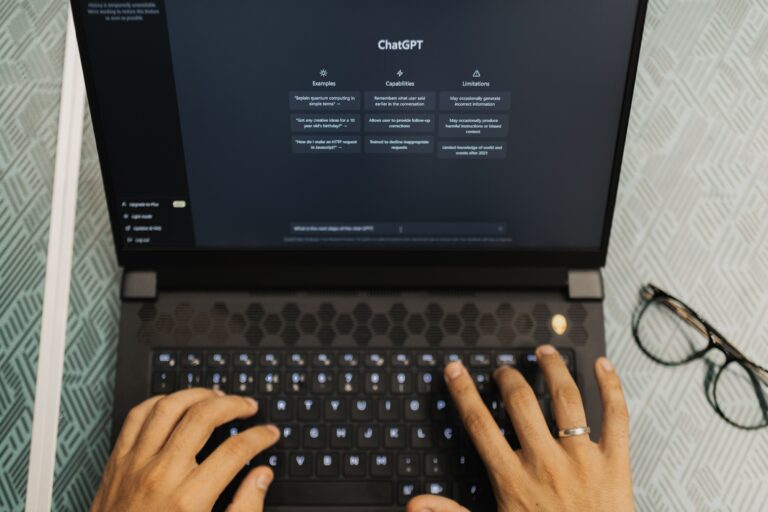
It punishes you because the AI names one to three practices total instead of ten, so being second-best is the same as being invisible. When a patient typed “best Botox in Manhattan” into Google, they used to see ten organic results plus a map pack. In 2026, the same patient typing the same query into ChatGPT, Perplexity, or Claude gets a paragraph that names one to three practices. The funnel is narrower now, and ChatGPT alone reached 800 million weekly active users in late 2025 with growth continuing into 2026, so a meaningful share of your prospects is already running their decisions through that funnel.
Why are aesthetic AI queries higher-intent than other industries?
Because aesthetic patients usually have no primary provider, so they go wherever the AI points them. A patient asking about Morpheus8 or Sculptra may be researching. A patient typing “best Botox near me” already has a card in hand. Aesthetic patients do not have a primary med spa the way they have a primary dentist. They go where the recommendation points them, especially for entry treatments. That makes AI citation share a near-direct proxy for new patient flow.
How do small GEO mistakes compound into total invisibility?
Each mistake on its own dings AI confidence in your practice. Combined, they collapse confidence to near zero and the AI refuses to name you at all. A brochure-style treatment page is bad on its own. Combine it with inconsistent practice names and no schema and AI confidence in your entity record vanishes. Owners who think they have “a couple of small marketing gaps” usually turn out to be invisible across five of six AI engines for their core treatments. The AI search audit framework we run for med spa Botox and filler queries surfaces the same seven mistakes in most practices we look at.
What are the seven GEO mistakes med spas keep making?
These are not ranked by severity. They are ranked by frequency. Most practices we audit make at least four of the seven.
Why is treating GEO like SEO the most expensive mistake?
Because SEO optimizes for being one of ten links on a results page and GEO optimizes for being the one practice named in a paragraph. The foundational tactics overlap but the priority order, the content structure, and the measurement framework are different. Practices that come to us after a year with a local SEO agency are often ranking well on Google for treatment-and-city queries and completely invisible inside ChatGPT for the same queries. The agency did its job. It just was not the job that mattered for AI search.
What makes a brochure-style treatment page invisible to AI?
It is invisible because the AI cannot lift promotional sentences into an answer without sounding like an advertisement, so it skips you and quotes a competitor whose copy answers a real question. Open your Botox page and read the first paragraph out loud. Could ChatGPT lift any sentence from it and use it in a one-paragraph answer to “what is Botox” or “how long does Botox last”? Most med spa treatment pages open with phrases like “Our skilled injectors are passionate about helping you look refreshed and confident.” AI engines will not quote that. A competitor whose page opens with “Botox is an FDA-approved neurotoxin that temporarily relaxes facial muscles to soften expression lines” gets the citation instead. This is the single highest-leverage content fix available to most practices.
Why does generic schema markup hurt your AI citations?
It hurts you because a generic LocalBusiness block leaves the AI guessing what you actually do, while the specific aesthetic-medicine schema types tell it directly. Schema.org structured data is how a website tells AI engines, in machine-readable terms, what kind of business it is, where it operates, who its providers are, and what services it offers. For a med spa, the schema types that move citations are MedicalBusiness or MedicalClinic for the practice, Physician for each named provider (the schema spec maps “Physician” to medical professionals broadly, including NPs and RNs), and MedicalProcedure for each major treatment. Most med spa sites have neither – we have seen practices pick up Botox and filler citations within four to six weeks of clean schema deployment, often before any new content was published.
How does an inconsistent practice name across the web kill your citations?
It kills citations because AI engines run entity resolution across multiple sources at once, and inconsistent records get downgraded to “ambiguous” and dropped. A med spa that appears as “Smith Aesthetics” on Google, “Smith Medical Spa” on RealSelf, “Dr. Smith MD Aesthetics” on Healthgrades, and “Smith Spa and Wellness” on its own website forces the AI to decide whether those are one practice or four. AI engines are conservative. They downgrade entity confidence and refuse to recommend ambiguous records. Fixing this is tedious and free. Most practices have not bothered.
Why do reviews stacked only on Google underperform in AI search?
They underperform because ChatGPT and other LLMs cannot see inside Google’s walled garden of reviews (BrightLocal, 2025), so a practice with 300 Google reviews and zero on RealSelf or Healthgrades looks thin to the AI. The AI weights coverage across multiple authoritative surfaces, not raw count on one. Owners overinvest in Google reviews because Google rewards them in the local pack. AI engines reward practices that show up across the small set of surfaces they actually cite in aesthetics: RealSelf, Google Business Profile, Healthgrades, vitals.com, the device-maker locators (Allergan PartnerPlus, Galderma, Merz), and a few regional aesthetic publications. Claiming and completing your RealSelf and Healthgrades profiles buys you a citation. The hundred-and-first Google review buys very little.
What format does blog content need to be cited by ChatGPT and Perplexity?
It needs a question as the title, a short direct answer in the first paragraph, then detail and examples in clear H2 sections. Plenty of med spa blogs exist. Very few get cited by AI. The reason is format, not topic. A post titled “5 Reasons to Love Lip Fillers” with three vague paragraphs about confidence will not get cited even if you publish one a week for a year. A post titled “How Long Does Lip Filler Last?” that opens with a one-sentence answer will be picked up within a month of indexing. The point is not more content. The point is content the AI can lift verbatim into an answer with your practice name attached.
Why does not measuring AI citations hide every other GEO mistake?
Because without a baseline you cannot tell which fixes worked and which dollars were wasted. Most med spa owners cannot tell you whether their Botox visibility on ChatGPT is better or worse than it was three months ago because they have never asked. They are running an AI search strategy with no AI search baseline. The fix is to lock in five to ten queries your patients actually use, run them through ChatGPT, Perplexity, Claude, and Google AI Overviews on a fixed schedule, and track named appearances per cycle. If you do not have a baseline, you keep paying for tactics that are not moving the metric.
How many consults are these mistakes actually costing me?
More than you would think and less than scare-math suggests. The American Society of Plastic Surgeons reported 9.48 million minimally invasive neurotoxin (Botox) procedures in the United States in 2023, up 9% year over year, and the category continues to grow. A meaningful share of those patients now decide via AI search before booking – BrightLocal’s 2025 research found 45% of US consumers now use AI tools for local business recommendations, up from 6% a year prior. Even assuming a conservative slice of new Botox patients in a metro ask an AI engine in 2026, you have hundreds of monthly AI-influenced queries in a mid-size city. The first symptom of being invisible is not a missing patient. It is a patient who arrives and casually says they “asked ChatGPT” or “saw you mentioned on Perplexity.” When that line stops appearing in your consults while it appears in your competitors’, you have a measurable AI gap – usually six to nine months old before owners notice.
In what order should I fix these mistakes?
Sequence matters because each fix makes the next one work harder. We run this same order with every practice and the compounding is real.
What goes first in the GEO fix order?
Foundation work: schema markup and NAP cleanup. Deploy MedicalBusiness, Physician, and MedicalProcedure schema. Clean up your name, address, phone, and provider names across every listing. This is the unglamorous work every other tactic depends on. Without it, content and reviews do not register clearly to the AI. The schema deployment is a two-to-four hour developer task. NAP cleanup is tedious but free. This is exactly where we start the GEO foundation work for aesthetic practices every time.
What comes after foundation work?
Content. Rewrite the opening of your top three treatment pages so the first sentences answer specific patient questions. What is Botox. How long does it last. Does it hurt. How much does it cost in your city. Keep your booking CTA. Keep your brand voice. Just lead with the answer.
Where should you concentrate your distribution effort?
On the small set of surfaces AI engines actually cite in aesthetics. Claim and complete your profiles on RealSelf, Healthgrades, vitals.com, and the device-maker locators relevant to your treatment mix. Stop spreading effort across fifty generic directories. Concentrate on the small set the AI is actually citing.
How often should you re-run the AI citation audit?
Monthly, with the same five-to-ten queries every cycle. Track named appearances. Notice when citations expand from lower-competition to higher-competition queries (that is the foundation working). Notice when stale facts about your practice get repeated (that is a source you have not corrected yet).
The timeline most practices see: two to four weeks after schema and NAP cleanup, AI engines start picking up the structured signals. Four to eight weeks after content rewrites publish, initial citations appear for less competitive queries. Eight to sixteen weeks in, you start displacing competitors on more competitive queries. Month four to six, citation share stabilizes and you defend rather than chase.
We run a free AI Search Audit on twenty-five to thirty-five prompts across ChatGPT, Perplexity, Claude, and Google AI for your specific treatments and city, then send you a written report showing which mistakes are active, which competitors are winning the citations, and the fix order for your practice. Delivered inside 48 hours.
How can a med spa owner audit their own visibility this week?
Open ChatGPT, Perplexity, Google AI Overviews, and Claude in four tabs. Use the free tier. For city-specific queries make sure web search is on. Then run five queries: "best Botox in [your city]," "[top filler treatment] near [your city]," "best med spa in [your city] for [your signature device]," "how long does [your top treatment] last," and "is [your top treatment] safe."
For each query, capture three things: is your practice named, who else is named, and what does the AI say about each. Then write a one-sentence gap statement: “When patients ask AI for [my primary treatment] in [my market], my practice is named [X] times out of [N] queries.” That sentence is your baseline. Without it, nothing else you do is measurable.
Frequently asked questions
How long does GEO take to show results for a med spa?
Four to eight weeks after content rewrites publish, initial citations appear for less competitive queries. Eight to sixteen weeks in, higher-competition queries start to flip. Most practices see meaningful named-appearance gains by month four to six and use that compounding to defend position from there.
Is Google Business Profile still important now that AI search matters?
Yes, but for different reasons than it used to be. Google Business Profile feeds Google AI Overviews directly and is one of the surfaces every other AI engine cross-references when verifying a med spa’s existence and details. The mistake is treating GBP as the whole local strategy. It is one of six or seven surfaces AI engines weight and a clean profile is necessary but not sufficient on its own.
Can a med spa owner fix these mistakes in-house?
Most of them, yes, if you have an in-house marketer comfortable with structured data and content writing. The audit takes an afternoon. Schema markup is a few hours for a developer. The hardest part is content rewriting because it requires an answer-first voice that is not how aesthetic marketing copy is usually written. Practices without an internal marketer either hire a specialist or accept that the work moves slowly.
Do RealSelf reviews matter more than Google reviews for AI citations?
In aesthetics, yes, for citations specifically. RealSelf is the single most-cited aesthetic source across Perplexity and ChatGPT answers in our audits. Google reviews still matter for Google AI Overviews and for local search ranking generally, but a practice with zero RealSelf presence is often invisible on aesthetic AI queries regardless of Google review count.
Does my med spa need its own blog to be cited by AI?
Not strictly, but a well-formatted question-and-answer blog is one of the highest-leverage assets available. Three posts written in the right structure outperform thirty posts written in the brochure-style template. The point is to publish content the AI can quote, not content that fills a content calendar.
Run the audit this week
The seven mistakes are visible inside an hour. The fix takes four weeks to six months depending on your starting point. The cost of doing nothing is a quietly declining share of new patient flow that will not show up on a dashboard until your competitor across town has already locked in the AI citation share for your top treatments. Read more about our GEO services for med spas, or book a free AI Search Audit and we will run the queries for you.
Sources
Every stat and authoritative claim in this post cites a primary or industry source. Open any link below to verify.