Where do lip filler patients actually start their search in 2026?
Somewhere they did not start a year ago. The shift is the biggest change in aesthetic patient acquisition since Instagram became a treatment showcase in 2014, and it is moving faster than most owners notice.
The Instagram-first decade is over
From 2014 through 2023 the canonical lip filler patient journey started on Instagram. A patient saw before-and-after photos in their feed, saved a few, watched stories from local injectors, and then DMed the practice or googled the name. Instagram drove discovery. Google verified. The phone call closed.
That funnel still exists in 2026, but it is now the second touchpoint, not the first. A 2024 analysis of #lipfiller content found only 26 percent of the top 50 Instagram posts came from physicians or licensed providers, with the rest from patients, influencers, and unverified accounts. Patients have learned to be more skeptical of the feed, and a meaningful share now treat Instagram as visual reference rather than provider research.
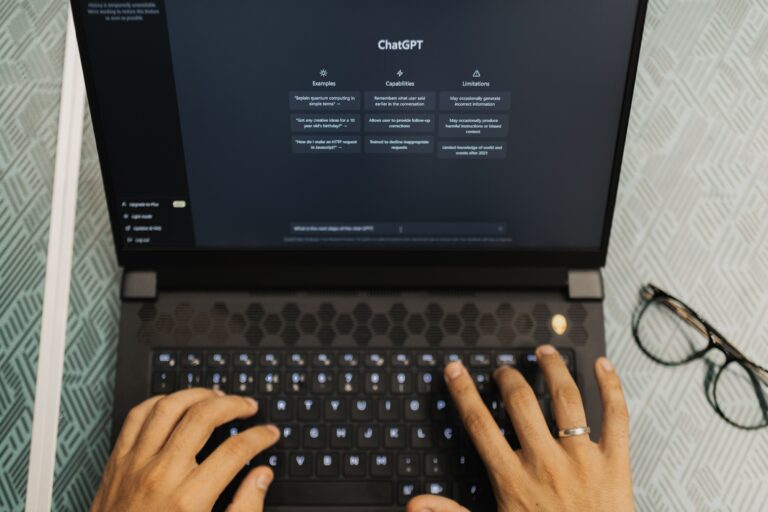
ChatGPT and Perplexity now own the research phase
The Medical Aesthetics AI Visibility Index 2026 analyzed more than 60 patient-intent queries across ChatGPT, Claude, Perplexity, and Google AI Overviews, and concluded that “patients no longer start with Instagram. They start with AI.” That is a category-defining sentence. It reframes the first touchpoint in aesthetics from a feed of curated before-and-afters to a one-paragraph answer in a chat window.
ChatGPT is on pace to reach one billion weekly active users in 2026, and Perplexity has more than doubled to 45 million monthly active users in the last twelve months. Both engines now handle a meaningful share of high-intent procedure research before the patient ever opens Google. The patient does not see ten ranked links. They see a paragraph that names one to three practices and answers their question in plain language.
Google is the last stop, not the first
Google still gets the click, but usually as the last click before the consult booking, when the patient verifies that the practice the AI named is real and finds the booking link. Gartner forecast in February 2024 that traditional search engine volume would drop 25 percent by 2026 due to AI chatbots, and the lip filler journey is one of the cleanest examples of that compression in real life.
The implication is uncomfortable. Ranking on Google for “lip filler [city]” is necessary but no longer sufficient. If the AI does not name your practice in the answer, the patient never starts the Google verification step. You are invisible at the moment the decision is being made.
Why has the lip filler research journey shifted to AI engines?
The shift is not aesthetic-specific. It is a category-wide change in how consumers handle high-consideration personal decisions. Lip filler just sits at the intersection of three factors that accelerate the move.
Lip filler patients ask private questions
A patient researching lip filler is asking questions they do not want to type into a search bar that might autocomplete in front of a partner. “Will lip filler look fake on a 28 year old,” “is it safe to get filler if I’m trying to get pregnant,” “how much is Juvederm Volbella in Boston.” These are private, comparative, and high-emotional-load. AI engines answer them privately and in one paragraph, instead of forcing the patient to read ten articles.
AI engines answer comparative questions instantly
A meaningful share of lip filler patients do brand comparison work. Which is better for thin lips, Restylane Kysse or Juvederm Volbella. How long does Versa last compared to Volbella. Google answers these with a forum thread and three articles. ChatGPT answers them in three sentences. A research phase that used to take an hour now compresses to about ninety seconds.
One-paragraph answers replace ten-link decisions
The deeper shift is that the AI answer format itself changes the decision. When a patient gets ten links, they choose. When a patient gets a paragraph that names two practices, the AI chose. The patient’s job becomes verification, not selection. That rewards a fundamentally different visibility strategy.
What kinds of lip filler questions are patients asking AI engines?
To understand which queries matter for your practice, look at what patients actually ask. Five categories dominate.
Brand and product comparisons
These are the highest-volume comparative queries and where AI engines lift product detail into the answer. “Juvederm Volbella vs Restylane Kysse,” “best HA filler for thin lips,” “is Versa good for first-time lip filler.” Hyaluronic acid lip fillers are projected to capture 94.6 percent of revenue in 2025, so most comparison queries land on HA brand names. If your treatment pages do not name the specific products you use and explain why, the AI cannot quote you in a comparison answer.
Pain, recovery, and safety questions
These are the most frequent first-touch queries because they are the gating decision. “Does lip filler hurt,” “how long is the swelling,” “is it safe while breastfeeding,” “what are the risks.” AI engines reward pages that answer these in plain factual language and quote the answer back with a practice name attached. Direct-answer copy gets lifted. Brochure copy gets skipped.
Pricing and longevity questions
Patients ask AI for pricing because it is awkward to get from a practice directly. “How much does lip filler cost in [city],” “is one syringe enough for first time,” “how often do you have to redo it,” “how long does Volbella last in the lips.” If your pricing is locked behind a consult booking and your treatment page does not address longevity, you get cited in none of these answers.
Practice-finding queries in specific cities
These map directly to consults. “Best lip filler injector in Manhattan,” “top med spa for lip filler in Miami,” “who does the most natural-looking lip filler in Dallas.” The American Society of Plastic Surgeons reported 1,449,565 lip augmentation procedures using injectable materials in the United States in 2024, up one percent from 2023, and a meaningful share of those patients ran one of these queries through an AI engine before booking. The practice the AI names wins. The practice ranked third on Google for the same query does not.
Treatment plan and provider questions
The deepest queries sit near the decision point. “Nurse injector or MD for lip filler,” “what to ask a lip filler injector at consultation,” “how to tell if a med spa uses real Juvederm.” These reward practices that publish in question-and-answer voice and earn editorial mentions in third-party publications the AI cites.
We run a free 25 to 35 query audit across ChatGPT, Perplexity, Claude, and Google AI Overviews for your top treatments and your city. You get a written report in 48 hours with the named-appearance baseline and the first three fixes to make.
Get Your Free AI Visibility Teardown →How can a med spa make sure ChatGPT names them for lip filler queries?
The fix is not glamorous. It is foundational work that compounds quickly when done in the right order. Three things move the needle inside the first ninety days.
Rewrite the top of the lip filler treatment page
Open your lip filler treatment page and read the first paragraph out loud. If it says “Our skilled injectors are passionate about helping you achieve the lips of your dreams,” ChatGPT will not quote it. The AI is trained to avoid lifting promotional language into answers, so it will skip you and quote a competitor whose page opens with a direct factual answer.
The rewrite is the highest-leverage content change available. Replace the first 150 words with direct answers to the questions patients ask. What is lip filler made of. Which products you use and why. How long results last. How much one syringe costs in your practice. Whether it hurts. Lead with the answer. Keep your brand voice in the body. Stop opening with marketing copy.
Add MedicalProcedure schema for hyaluronic acid filler treatments
Schema.org structured data tells AI engines, in machine-readable terms, what your business is and what services it offers. For a med spa offering lip filler, the relevant types are MedicalBusiness or MedicalClinic for the practice, Physician for each named injector (the spec maps Physician to medical professionals broadly, including NPs and RNs), and MedicalProcedure for each treatment with the brand of filler in the description.
Most med spa sites have no schema or a generic LocalBusiness block from a 2019 SEO retainer. Both force the AI to infer your practice from prose. A clean schema stack is a two-to-four hour developer task that often produces measurable citation lift inside four to six weeks. This is the structural fix we sequence first in our AI Search Audit for med spa lip filler and injector visibility work.
Publish at least one Q-and-A style lip filler post per quarter
A single citation-shaped blog post does more for AI visibility than thirty brochure-style posts. The format is consistent across every engine: a question as the title, a direct one-sentence answer in the first paragraph, then detail in clear H2 sections the AI can lift verbatim. “How long does Juvederm Volbella last in the lips” beats “5 things to love about Juvederm.” Three posts per year in the right format, kept current with product and pricing detail, will outperform a content calendar that fills a slot every week with generalist copy.
What does an AI search audit for a lip filler practice look like?
You do not need an agency to find out where you stand on lip filler visibility. You need about thirty minutes and four browser tabs.
The five queries to start with
These five capture roughly seventy percent of the lip filler decision journey: “best lip filler in [your city],” “best HA filler for thin lips,” “how much does lip filler cost in [your city],” “is lip filler safe for [common patient subgroup, e.g., first-timers or 40-year-olds],” and “best injector for natural-looking lip filler in [your city].” Run each query in the four engines below. Capture three things per query: is your practice named, who else is named, and what does the AI say about each.
The four engines to check
Run the same queries through ChatGPT, Perplexity, Claude, and Google AI Overviews. Use the free tier of each. For city-specific queries make sure web search is enabled in ChatGPT and Claude so the engines check current data instead of training memory alone. Perplexity defaults to current data. Google AI Overviews appears at the top of a Google search results page when triggered.
The named-appearance baseline
Write one sentence at the end: “When patients ask AI engines for lip filler in [my market], my practice is named [X] times out of [N] queries.” That sentence is your baseline. It is the most important number a med spa owner can know in 2026 and almost no owner currently knows it.
If you want a longer version of this audit run on twenty-five to thirty-five queries across all four engines with a written diagnostic report and an action plan, that is the free AI Visibility Teardown we run for med spas as the front door of every engagement.
Frequently asked questions
Are AI engines like ChatGPT really driving lip filler consults already, or is this still hype?
The shift is real and measurable. The Medical Aesthetics AI Visibility Index 2026 found AI engines are now the first research surface for a meaningful share of aesthetic patients. Gartner projected a 25 percent drop in traditional search engine volume by 2026, and lip filler is furthest along the curve because the queries are private, comparative, and high-emotional-load. Practices waiting for "more evidence" are already losing citation share to competitors who are optimized.
Does my med spa need to be on RealSelf to get cited by AI engines for lip filler?
For aesthetic citations, RealSelf and Healthgrades show up disproportionately across Perplexity and ChatGPT answers, especially on treatment and provider comparison queries. A med spa with zero RealSelf presence is often invisible to the AI regardless of Google review count. Claiming and completing the profile is one of the highest-leverage free moves a lip filler practice can make.
What about Instagram, is it dead for lip filler patient acquisition?
Not dead, but demoted. Instagram is still useful for visual portfolio, social proof, and ongoing patient engagement. It is no longer the first touchpoint. The 2024 #lipfiller analysis found only 26 percent of top posts came from physicians, which has trained patients to be more skeptical of the feed. Instagram should be part of the funnel, not the top of it, and time spent there should be balanced against the AI visibility surfaces that now lead the journey.
How long does it take to start showing up in ChatGPT and Perplexity for lip filler queries?
In our experience, four to eight weeks after a clean schema deployment and a content rewrite of the lip filler treatment page, the first citations appear on lower-competition queries. Higher-competition queries like "best lip filler in [major city]" take longer, usually eight to sixteen weeks, because they are contested across more practices and the AI is weighting third-party citation surfaces heavily. By month four to six most practices that complete the foundation work see measurable named-appearance gains.
Can a med spa handle this work in-house or does it require an agency?
Most of the work is doable in-house with an internal marketer comfortable with structured data, content rewriting, and listing cleanup. The audit is one afternoon. Schema deployment is a few hours of developer time. The content rewriting is the hardest part because it requires an answer-first voice that is not how aesthetic copy is usually written. Practices without an internal marketer hire a specialist or accept that the work moves slowly.
Is it too early for a small or single-location med spa to invest in AI search visibility?
The opposite. The cost of being early is low and the cost of being late is high. AI search adoption is accelerating and the practices that establish citation share now will defend it later. The single-location practice that fixes its foundation in 2026 will hold the AI’s mind share in its market against larger competitors who arrive in 2027 to the same realization. Citation share, once built, is sticky in a way Google rankings are not.
Sources
Every stat and authoritative claim in this post cites a primary or industry source. Open any link to verify.